ORCHESTRATING THE FUTURE OF Financial Services
Introduction
Financial institutions are converging on a set of strategic IT investments centered around data. Over the next three years, these organizations aim to leverage data more effectively to benefit their business, shareholders, and customers through AI, advanced analytics, and personalized customer experiences.
This guide defines what each of the five initiatives requires and shows how Apache Airflow® and Astro make them executable.
Why Airflow and Astro?
- Apache Airflow has grown to become the industry’s most widely used system for orchestrating data workflows, as well as being one of the world’s most active open source projects.
- Astro, Astronomer’s unified orchestration platform, elevates Airflow into an enterprise-grade control plane purpose-built for high-scale AI and data-driven environments.
INITIATIVE ONE Data Governance, Security & Compliance Frameworks
Start with Trust: Why Governance Comes First.
No AI model, analytics dashboard, or customer-facing product works without clean, controlled, and compliant data. If governance fails, every downstream system inherits the risk, exposing financial institutions to regulatory fines, reputational damage, and erosion of customer trust. That’s why leading firms are starting here.
Governance isn’t an afterthought; it’s a dependency. Without clear ownership, reliable pipelines, and enforceable controls, everything else breaks. Data stops being an asset and becomes a liability. The priority is simple: make data trustworthy, or don’t build on it at all.
Governance Built In, Not Bolted On
To make governance real, teams need capabilities that are enforced by the platform, not just by policy. Astro delivers control, visibility, and security at every stage of the data workflow.
| Required Capability | How Astro Supports It |
| Policy-as-Code for Governance | Pipelines are defined in code and deployed via CI/CD. Teams can embed masking, validation, and logging as enforced steps, codifying governance directly into data operations. |
| Hardened Software Image for Production Deployment | Astro Runtime delivers a production-hardened Airflow distribution protected with timely security patches and controlled image updates. |
| Minimal Time to Upgrade to the Latest Software Release | Always remain current with the latest release offering the latest patches and security controls, reducing exposure to known vulnerabilities in open source code, with fast rollbacks where needed |
| Strong Access Control & Identity Management | Astro enforces RBAC, integrates with enterprise SSO/IAM, and supports isolated environments ensuring access is tightly scoped and auditable across sensitive workflows. |
| Comprehensive Data Lineage & Cataloging | Astro logs every task execution and data movement, providing a traceable path from source to output. This supports audit readiness and simplifies impact analysis for changes. |
| Automated Compliance Monitoring | With centralized metadata and usage dashboards, Astro helps detect failures, SLA breaches, or anomalies, surfacing deviations in pipeline behavior that impact regulated processes. |
| Orchestration-Aware Data Quality Monitoring | Astro Observe links data quality checks such as volume, schema, and completeness, directly to pipeline execution. Teams can trace issues to specific tasks, enabling faster root cause analysis and proactive remediation. |
| 24x7 Support. Commercially-Backed SLAs | Airflow experts on call—provided by the engineers that build it. With Astronomer’s team you accelerate adoption, resolve issues faster, and keep mission-critical pipelines running. |
Remote Execution: Enabling Secure, Cloud-Native Data Orchestration
For financial services firms, managed cloud platforms often introduce unacceptable risk. Critical workflows rely on sensitive data: customer PII, transaction records, trading strategies, pricing models, regulatory reports, and risk exposures. Sending that data to a vendor’s infrastructure violates security policy, regulatory obligations, or both.
Astro solves this with Remote Execution, a deployment architecture introduced in Airflow 3 that separates orchestration from execution. You get a fully managed Airflow control plane without sending any sensitive data outside your environment. Workflows run where your policies dictate: inside private clouds, on-prem environments, or on managed public cloud infrastructure.
Your pipelines are orchestrated centrally but executed locally. That means:
- Customer data (e.g., account balances, KYC info) stays within your compliance boundary.
- Trading algorithms and proprietary models are never exposed outside your VPC.
- Regulatory datasets (CCAR, AML, Basel) remain in the systems where they're governed.
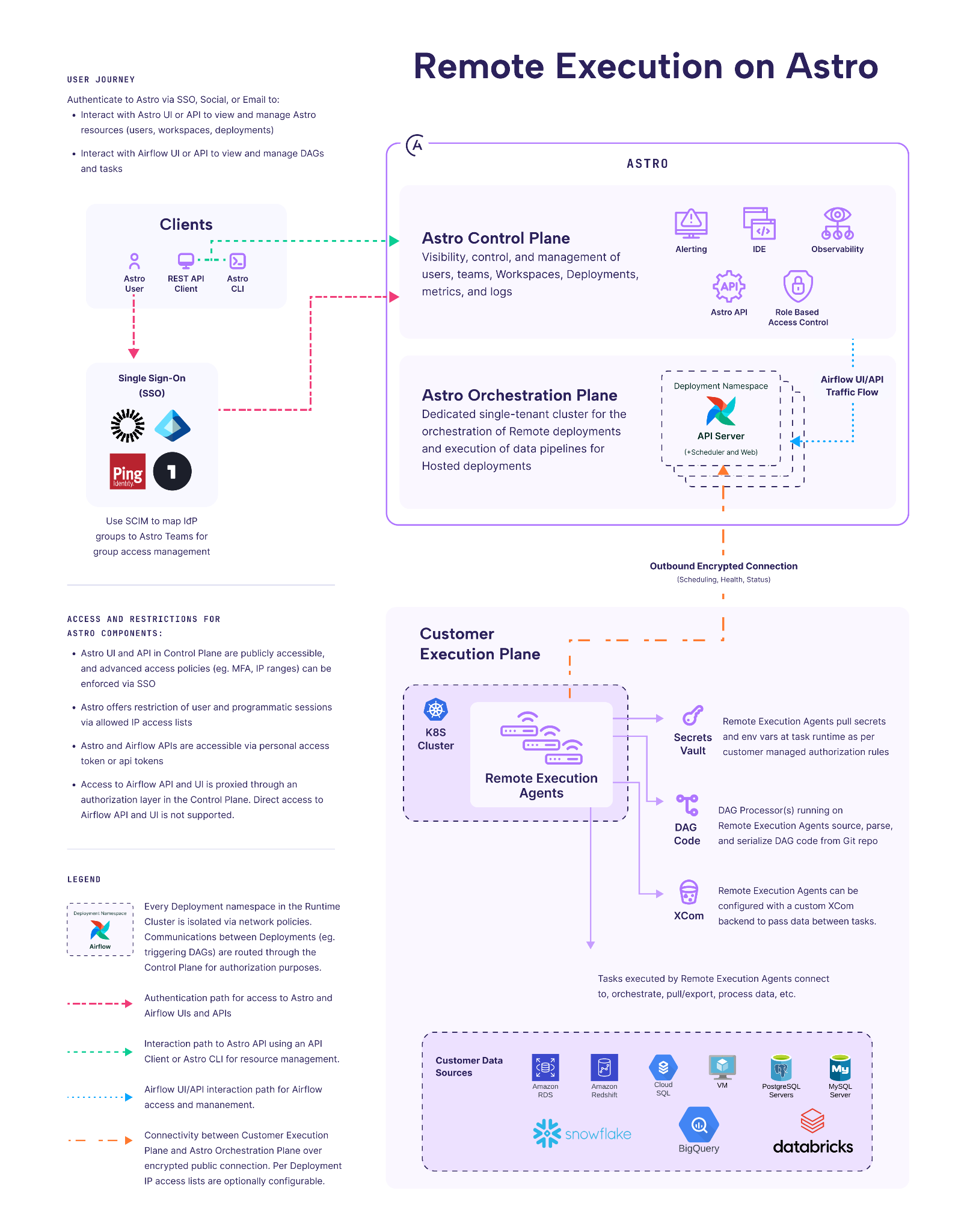
Figure 1: Stepping through Remote Execution’s architecture and traffic flow
Remote Execution uses a three-plane architecture:
- The control plane manages users and metadata but never sees your data.
- The orchestration plane schedules workflows in a single-tenant environment.
- The execution plane (fully yours) runs the tasks using your infra, secrets, and permissions.
Only outbound, encrypted connections are used. There is no need for inbound firewall exceptions. Astro’s exclusive remote execution agents authenticate with your IAM and run jobs under customer-managed identities. This aligns with zero-trust principles and removes the need to trade security for operational efficiency.
Bottom line: Astro gives you the benefits of a managed orchestration platform, including agility, performance, reliability, and reduced ops burden, without customer data ever leaving your secured and approved environment. That’s what makes it deployable in regulated environments such as financial services where conventional SaaS models fail.
You can learn more by downloading our whitepaper: Remote Execution: Powering Hybrid Orchestration Without Compromise.
In addition to Remote Execution, Astro offers compliance across key industry regulations including GDPR, PCI-DSS, and SOC 2. Astro provides a robust solution for financial institutions seeking to comply with the EU’s DORA (Digital Operational Resilience Act). You can learn how Astronomer helps organizations address DORA’s five key pillars here.
Astro Private Cloud
For organizations that cannot adopt any managed services, Astro Private Cloud delivers enterprise-grade Airflow-as-a-Service entirely within your own environment. It runs exclusively on customer-managed infrastructure—across private cloud, on-premises, or fully air-gapped deployments—providing complete ownership over data, network boundaries, and security controls.
Astro Private Cloud consolidates fragmented Airflow usage into a centrally governed platform with isolated, multi-tenant deployments. A unified control plane enables teams to standardize orchestration, enforce security and governance policies, and manage multiple Airflow environments while individual teams operate independently within dedicated namespaces.
By combining centralized governance with full infrastructure control, Astro Private Cloud reduces operational overhead, strengthens security and compliance, and enables organizations to reliably scale orchestration across the enterprise.
Note: Astro Private Cloud does not include features specific to the hosted Astro service, such as the Astro IDE and Astro Observe.
Airflow in Action
Deutsche Bank, one of the world's largest clearing banks operating across 35 countries, standardized on Airflow to orchestrate critical pipelines spanning anti-financial crime reporting, regulatory submissions, and account statement generation across conflicting data residency rules and strict access controls. The bank engineered pipelines around data immutability and exactly-once execution, with every run tied to a unique identifier so auditors can trace precisely what was processed, when, and how. Learn more.
American Express operates across 3,000 on-premises databases and a central data warehouse with around 10,000 tables, where stale or incomplete metadata directly undermines governance and compliance. The team uses Airflow to build a templated metadata pipeline that scans every data source, standardizes output, and publishes updates to their metadata catalog continuously across more than 100 production jobs. The result is a single orchestration layer that keeps metadata current at enterprise scale. Learn more.
INITIATIVE TWO AI and Machine Learning Initiatives in Banking
Banks are prioritizing AI to automate decisions, personalize services, and unlock new revenue. The objective is clear: embed ML and agentic AI across the enterprise to improve efficiency and competitiveness. For many, it’s now a survival issue. According to KPMG, 81% of banking and insurance CEOs name generative AI a top investment priority. Citi estimates AI could boost global banking profits by 9%, or ~$2 trillion, by 2028.
Scaling AI enterprise-wide poses significant challenges. Many banks struggle with legacy technical debt that impedes AI adoption. While 92% of financial services firms reported profitable returns from AI investments, only 32% are generating returns at scale.
institutions are taking a targeted approach to AI investments across high-impact use-cases :
- Customer Service & Personalization: AI-powered chatbots and virtual assistants for 24/7 customer support, and AI-driven personalization engines to recommend tailored financial products or investment advice (e.g. robo-advisors). Some banks use AI to nudge customers during online applications, reporting a 10–20% increase in completion rates.
- Risk Management & Fraud Detection: Machine learning models for real-time fraud detection, anti-money-laundering (AML) pattern recognition, credit scoring, and risk analytics. Agentic AI is increasingly being used to detect anomalies and enhance compliance monitoring.
- Market Research & Trading: AI algorithms for market trend analysis, trading strategy optimization, and portfolio management. Investment banks explore AI for predictive market modeling and trade execution.
- Back-Office Automation: AI to automate document processing, data extraction, and reporting (reducing manual effort in loan processing, KYC checks, etc.), improving accuracy and speed.
- Internal Knowledge Management: Agentic workflows to research and generate reports, GenAI assistants to summarize outputs and support employees with decision-ready insights.
From Training to Inference: The Pipeline Layer That Makes It Possible
AI strategy is worthless without execution. The table below maps the technical requirements for operationalizing AI in financial services and Astro’ capabilities.
| Required Capability | How Astro Supports It |
| Unified, Scalable Data Pipelines | Astro orchestrates end-to-end AI workflows across training, inference, and retraining, ingesting from siloed sources via 1600+ connectors and scaling across cloud or on-prem compute, including GPU-backed infrastructure. |
| Model Lifecycle Automation & Observability | Astro enables scheduled and event-driven retraining, inference, and validation jobs. With built-in logging, retries, and alerts, teams track pipeline health and model performance in production. |
| Secure, Compliant AI Execution | With Remote Execution in Airflow 3, teams keep data, models, and compute inside regulated environments. Fine-grained role-based access, execution isolation, and audit trails support zero-trust and regulatory compliance. |
| Real-Time and Parallel AI Workloads | Event-driven scheduling and parallel inference in Airflow 3 allow models to respond to user actions or new data instantly, ideal for agent-triggered LLM workflows and customer-facing AI features. |
| Multi-Step Agentic Workflow Orchestration | The Airflow Common AI Provider enables orchestrated, multi-step agentic workflows with branching logic, tool calls, and vector embedding support, all with production-grade error handling and scalability built in. |
| Flexibility to Evolve with the AI Landscape | Built on Apache Airflow, Astro is open and technology-agnostic, supporting custom code, new libraries, and emerging connectors. Financial institutions can swap AI tools or add new workflows without re-building infrastructure, accelerating experimentation and adoption. |
Astro and Airflow in Action
Airflow is already used by some of the most demanding AI companies and agentic workloads on the planet:
- OpenAI has standardized on Airflow across its business with over 7,000 pipelines spanning research, operations, and finance, all while providing a foundation for 10x growth. Read more.
- GitHub relies on Airflow to process billions of developer events per day, orchestrating the feedback loops used to continuously improve Copilot. Read more.
The financial services industry is following suit.
At a top 5 global bank more than 100 data and ML teams use Astronomer to orchestrate AI and data workflows. With over 60 Airflow deployments running on a unified platform, the bank has standardized execution for use cases like real-time fraud detection, LLM-powered chatbots for consumer banking, and AI-driven forecasting for wealth management research. Astro supports fast, reliable orchestration across ETL, MLOps, and agentic AI, with certified Airflow engineers across the organization driving faster deployment and consistent governance across all lines of business.
One of the largest U.S. credit bureaus powering global fraud and identity decisions needed a multi-cloud orchestration strategy to access the latest AI innovations across AWS and GCP, but legacy tooling caused environment sprawl, upgrade bottlenecks, and limited observability that constrained their ability to ship. Standardizing on Astro delivered governed, multi-cloud orchestration that freed teams to build and deploy AI workloads wherever the best capabilities live. The result is multi-million dollar annual cost savings and faster pipeline development that gets new AI-driven features to market faster.
INITIATIVE THREE Advanced Analytics and Real-Time Insights
Financial institutions aim to become insight-driven enterprises delivering accurate, up-to-date data and predictive analytics to decision-makers across the organization. The goal is to move beyond static reports and siloed dashboards to enable faster, smarter decisions at every level, from front-line operations to strategic planning. By embedding analytics directly into day-to-day workflows, banks can improve responsiveness, reduce risk, and unlock new opportunities across functions like finance, risk, customer experience, and product development
Key use cases include:
- Enterprise BI Modernization: Banks are replacing static reports with real-time dashboards and self-service tools that deliver live visibility into metrics like risk, liquidity, and performance across business units.
- Predictive Analytics & Forecasting: Teams use sophisticated models to forecast market trends, customer churn, credit risk, and macroeconomic scenarios, updating continuously as new data arrives.
- Event-Driven Insights: Financial institutions analyze real-time transaction and market data to trigger immediate actions like fraud alerts or automated trades.
- 360° Customer Views: By unifying customer data across products and channels, banks enable real-time visibility into client relationships, lifetime value, and behavioral risk.
- Automated Reporting & Decision Support: Institutions automate recurring reports and embed AI-driven recommendations into workflows to support faster, data-backed decisions.
Most firms struggle with fragmented data systems, siloed infrastructure, and batch-driven processes that delay insights and introduce inconsistency. Without a unified, real-time view, decisions rely on stale reports, leading to missed risks, slower customer response, and competitive disadvantage. At the same time, regulatory demands and lack of skilled data engineers make high-quality, governed analytics hard to scale.
Getting the Right Data to the Right Place, Fast
Building real-time analytics isn’t just about faster queries—it requires coordinated pipelines, reliable data delivery, and deep visibility into how insights are produced and consumed. Here's how Astro enables it.
| Required Capability | How Astro Supports It |
| Real-Time Data Integration | Astro supports event-driven scheduling, triggering pipelines as new data arrives (e.g., transactions, market events). This enables real-time updates to dashboards, alerts, and models without polling or batch delays. |
| Unified Data Platform | With 2,100+ connectors and flexible orchestration, Astro integrates siloed systems spanning core banking, CRM, trading platforms into a single data pipeline layer feeding lakes, warehouses, models, and BI tools. |
| Advanced Analytics Enablement | Astro orchestrates complex, distributed workflows (e.g., Spark jobs, model scoring, multi-data set aggregations) and scales automatically to handle large datasets, enabling high-performance analytics without bottlenecks. |
| Unified Orchestration and Transformation | Manage complex analytics by orchestrating, running and observing dbt workflows with Cosmos, the open-source standard for seamless dbt orchestration and model-level visibility in Apache Airflow |
| Self-Service and Collaboration | Astro streamlines pipeline development through AI-assisted Dag authoring in the Astro IDE and centralized orchestration, making it easier for data teams to respond to ad hoc requests while maintaining control and visibility. |
| Diagnose Pipeline Failures in Minutes | Otto, the data engineering agent for Astro, pulls the logs, analyzes the failure, and proposes a fix. Get to the root cause in minutes instead of hours, without manually digging through code and logs. |
| Data Quality, Governance, and Observability | With Astro Observe, teams monitor data freshness, schema consistency, and pipeline health. Lineage tracking and SLA-based alerts help prevent bad data from reaching end users and accelerate root cause analysis. |
Astro in Action
Visa's BI team relied on a 20-year-old ETL tool and manually refreshed dashboards that, as transaction volumes grew, stretched data refresh cycles to 24 hours and caused cascading pipeline failures that blocked the timely, trusted data that advanced analytics depends on. Rebuilding their entire BI stack around Apache Airflow gave the team end-to-end automation across Databricks, AWS, Tableau, and Power BI, with built-in reliability, SLA monitoring, and event-driven processing that ensures analysts always have accurate, fresh data to work from. The result was a 70% reduction in engineer overhead, data refresh times cut from 24 hours to under 2 hours, and 100% business trust in data. Read more.
One of Southern Europe's largest financial institutions was running 14,000 production pipelines on heavily customized open-source Airflow, where manual upgrades, maintenance, and compliance reviews consumed 44 engineering days annually, stalling their migration to Azure and limiting investment in advanced analytics. Adopting Astronomer's fully managed Airflow on Azure unified orchestration across Microsoft Fabric and Databricks, simplified compliance, and freed engineers to focus on building the analytics capabilities that drive the business forward. The result was a 75% reduction in maintenance time and upgrades completed four times faster.
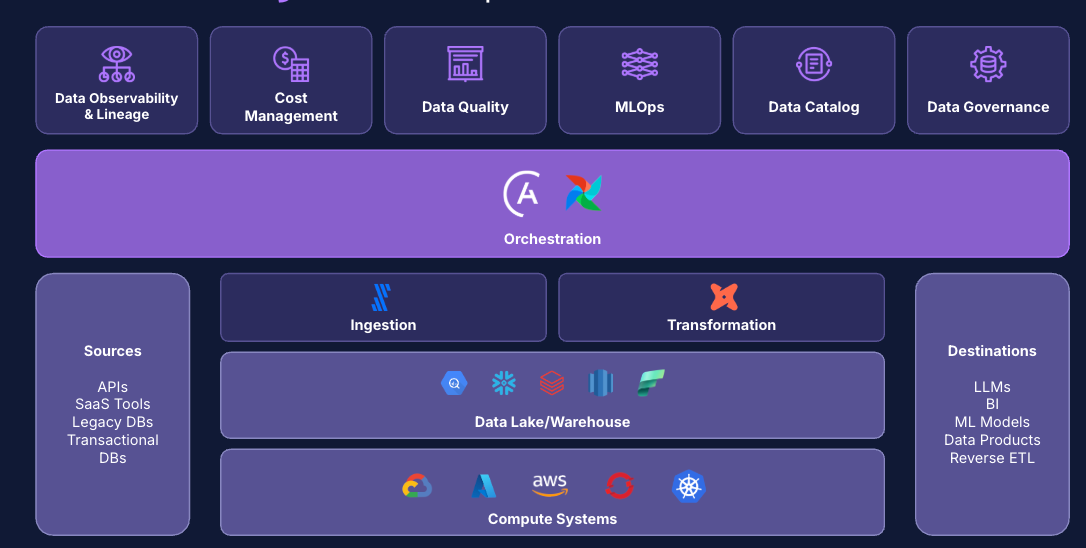
Figure 2: With the Astro platform, data teams work with a unified orchestration layer to build, run, and observe all of their critical data pipelines and workflows.
INITIATIVE FOUR Data Platform Modernization
Banks are modernizing their data platforms to shed legacy systems and build an agile, cloud-enabled foundation. The goal is to replace siloed, inflexible infrastructure with composable architectures that support AI, analytics, and open banking. By migrating to modern data lakes, warehouses, and hybrid platforms, firms aim to cut costs, reduce technical debt, and accelerate digital innovation—all within a unified, integrated strategy.
A recent survey finds that data modernization is an industry-wide priority receiving a growing level of focus and investment: 94% of firms have begun or completed data modernization efforts, 82% say data modernization is important to their firms' success over the next three years, and 64% will increase their spend on data modernization in the year ahead.
Alongside key initiatives such as core banking modernization, cloud migrations, and building API-driven integration layers, banks are modernizing software delivery and data management. They are doing this by adopting DevOps for faster software deployment and DataOps for faster data product delivery and efficient pipeline orchestration.
Modernization Without the Mess
Legacy modernization is notoriously challenging in financial services due to years of accumulated “technical debt.” Many core banking systems are so intertwined with daily operations that replacing them is like open-heart surgery. Some data teams feel “hostage” to old technology. Others struggle with the complexity of data conversion from old formats along with potential downtime or customer impact during transitions.
To modernize successfully, banks need more than cloud infrastructure—they need orchestration that bridges legacy systems, accelerates migration, and scales with demand. Here’s how Astro maps to those requirements.
| Required Capability | How Astro Helps |
| Hybrid-Cloud Flexibility | Astro’s Remote Execution. Decouples orchestration from execution, allowing sensitive workloads to run securely within your own infrastructure. It supports hybrid and multi-cloud deployments without exposing data, enabling zero-trust, policy-aligned orchestration across environments. |
| Plan Airflow upgrades with confidence | Otto, the data engineering agent for Astro, turns a multi-sprint project into a repeatable, agent-assisted process. It analyzes your entire Dag fleet against Astronomer’s knowledge base, identifying what breaks, proposing specific code changes, and producing a prioritized plan. |
| Data Migration & Integration from Legacy Systems | Bridging Legacy and Modern Systems. Astro connects to legacy systems (via JDBC/ODBC or custom hooks) and modern platforms. It orchestrates phased migrations with synchronized ETL workflows enabling safe, stepwise modernization without big-bang risks. |
| Microservices and API Enablement | API-Driven, Event-Aware Workflows. Astro supports event-driven orchestration and native API integration, enabling real-time data services and microservices-based patterns. These are critical for modern application architectures and open banking. |
| Production-Grade Reliability from Day One | Autoscaling, cross-region DR, and zero-downtime updates deliver a 99.9% uptime SLA replacing the significant operational overhead of self-managing Airflow clusters. |
| Security & Compliance by Design | Enterprise-Grade Governance and Observability. Astro provides role-based access, audit logs, and lineage tracking across all pipelines. This central visibility supports compliance (e.g., GDPR, BCBS 239) during and after modernization efforts. |
Astro in Action
Data teams in financial services firms adopt Astro to eliminate the legacy schedulers that often cripple the ability to ship new data products and workflows. Moving from legacy orchestration systems such as AutoSys, Control-M, Informatica or Apache Oozie to Astro unlocks strategic and operational gains:
- Cut costs by up to 75%. Organizations moving to Astro typically realize major savings through reduced infrastructure, licensing, and operational overhead, freeing budget for innovation.
- Unblock agility and scale with cloud-native orchestration. As a modern orchestration platform, Astro gives teams the flexibility, resilience, and scalability needed to support fast-moving data and AI initiatives without the constraints of legacy tooling and manual overhead.
- Attract and retain top engineering talent. Code-first and open source, by using Airflow data teams recruit top talent more easily and onboard faster, while avoiding lock-in to niche or proprietary tech.
Commonly migrated workloads include ETL jobs, data warehouse loads and refreshes, report generation and distribution, batch file transfers (FTP/SFTP jobs), data validations and quality checks, time- or event-triggered job dependencies across systems, and mainframe and SAP job coordination.
No matter what workload or legacy orchestration tool your organization is using, Astronomer’s Professional Services team can help. The company’s experts can build an operational framework to smoothly and safely migrate your workloads to Astro.
Examples of modernization in financial services companies includes:
- Northern Trust accelerated its mission-critical financial data processing workflows by 20% after migrating to Astro from its legacy system, speeding the analysis of critical operational data essential for managing the organization's balance sheets, income statements, and other financial reports. The transition to Astro has successfully migrated an entire ecosystem of 6,000 processes from over 100 source systems and more than 450 distinct data sets from legacy technologies.
- One of the world's largest financial institutions faced fragmented orchestration across four legacy tools that conflicted with their cloud modernization initiative, with manual provisioning, strict regulatory constraints, and limited internal expertise making it impossible to scale Airflow consistently across hundreds of teams. Partnering with Astronomer to build a fully automated, bank-grade Airflow platform gave the organization the architectural guidance and best practices needed to standardize orchestration enterprise-wide and accelerate their cloud transition. The result was 500+ Airflow deployments in production, over 1,000 engineers writing pipelines, and four legacy orchestrators retired.
INITIATIVE FIVE Data-Driven Customer Experiences & Applications
Global banks and investment firms are using data to deliver hyper-personalized, seamless customer experiences across channels. The goal is to anticipate needs, tailor services, and build data-driven applications that increase loyalty, unlock growth, and meet rising expectations, enabling “segment-of-one” experiences through a unified view of each customer.
Use cases include generating personalized product recommendations based on recent milestones, such as a salary increase or house move; digital advisory tools such as budget trackers for retail customers or dashboards for institutional clients to analyze their trading and risk exposure; and real-time alerts for events such as stock price movements or flagging suspicious activity on an account.
Powering Personalization with Trusted Data Pipelines
Delivering these experiences is hindered by fragmented systems, privacy constraints, and legacy cultures built around products, not people. Without unified, real-time customer views or strong consent management, banks risk falling short of rising expectations—and losing ground to more agile, personalized fintech and challenger bank offerings. Regulatory pressure for better customer outcomes adds urgency to using data not just for insight, but for service.
Delivering seamless, personalized experiences across channels requires more than just customer data. It demands a modern orchestration layer that connects, activates, and governs that data at scale.
| Required Capability | How Astro Helps |
| Unified Customer Data Platform | Orchestrating 360° Customer Data Pipelines. Astro automates ingestion from CRMs, mobile apps, core banking systems, and more, keeping customer profiles fresh and consistent by replacing ad hoc scripts with managed, reliable workflows |
| Real-Time Personalization Engine | Event-Driven Customer Triggers. Astro uses event-based scheduling to launch workflows in response to customer actions like page visits or purchases, triggering personalization models and notifications in real time. |
| API and Ecosystem Integration | Integration with APIs and External Services. Astro can both call and respond to APIs, acting as the orchestration layer between banking systems, open banking partners, and third-party apps enabling secure data exchange and extensibility. |
| Security & Privacy Controls | Ensuring Data Quality & Compliance in CX Workflows. Astro provides built-in RBAC, audit logs, and secure execution environments. Combined with Astro Observe, teams get visibility into how data is processed and can demonstrate compliance for every pipeline. |
| Multichannel Delivery & UX Support | Scaling and Reliability for Customer-Facing Processes. Astro orchestrates and scales background workflows that feed front-end systems, ensuring low-latency, high-reliability delivery of the data powering apps, alerts, and customer communications. |
Astro in Action
- A global payments leader processing over $2 trillion annually needed to rapidly stand up its own governed data platform while preserving existing CI/CD pipelines and Snowflake connectivity, with teams scaling fast and developers needing easier onboarding. Selecting Astro delivered a payments-grade orchestration layer with event-driven scheduling, centralized governance, and optimized infrastructure costs, enabling the data-driven customer experiences their business depends on at scale. The result was federated delivery across teams, reduced infrastructure costs, and a standardized governance model without disrupting a single running pipeline.
- One of Asia Pacific's largest retail and commercial banks unified disparate on-premise data across Astronomer and Snowflake to power the reliable, consistent data pipelines that fraud detection, financial crime workflows, and personalized customer experiences demand. Standardizing on a single multi-tenant Airflow platform delivered 45+ environments across development and production, eliminating the cost and risk of custom builds, and giving the bank a cloud-native foundation to rapidly bring new customer-facing services to market.
Conclusion and Next Steps
From powering real-time demand forecasting and AI-driven personalization, to unifying omnichannel experiences and modernizing supply chain execution, each initiative in this guide shares the same foundational requirements:
- Clean, timely, governed data
- Reliable, observable pipelines across hybrid, multi-cloud, and on-premise environments
- Scalability and cost efficiency that adapts to shifting consumer demand, seasonal peaks, and competitive pressure
That is the role of orchestration. The retailers that win the next decade will treat orchestration as the control plane for AI, customer experience, and operational excellence. They will operationalize it with platforms like Astro.
Build a trusted, future-ready data stack today.
Run an Astro TCO analysis and get in touch with our experts today to get results faster.
Get the Full Guide
Keep reading to explore how data orchestration is at the center of the top five data-driven investment areas in financial services.
By proceeding you agree to our Privacy Policy, our Website Terms and to receive emails from Astronomer.

Get started free.
OR
By proceeding you agree to our Privacy Policy, our Website Terms and to receive emails from Astronomer.