Orchestrating the Future of Healthcare
Introduction
Healthcare providers across the globe are zeroing in on five strategic IT investment areas over the next three years. These priorities center on leveraging internal clinical and operational data to drive efficiency, improve care quality, and enhance both patient and clinician experiences. Key initiatives include AI, advanced analytics and data platform modernization.
In this guide we profile each investment. We'll identify the objectives, challenges, and required capabilities behind each before exploring how the Astro unified orchestration platform built on top of Apache Airflow® can best support them.
Why Airflow and Astro?
- Apache Airflow has grown to become the industry’s most widely used system for orchestrating data workflows, as well as being one of the world’s most active open source projects.
- Astro from Astronomer is the first and only multi-and hybrid-cloud unified data operations platform. Unique capabilities like Remote Execution enable healthcare providers to gain the benefits of a managed cloud service without ceding control over sensitive data or compute.
INITIATIVE ONE Interoperability, Data Governance, and Compliance
Start with Trust: Why Governance Comes First.
Healthcare providers aim to build a fully interoperable and governed data ecosystem where patient and operational data flow seamlessly across systems and points of care under strict compliance controls. Clinicians can access a unified, accurate patient record in real time, and every data exchange is auditable, secure, and standardized.
This foundation reduces duplication, improves care coordination, and ensures that analytics, AI, and billing are built on trusted, high-quality data, turning governance from a compliance burden into a strategic enabler of safer, more efficient care. Example use cases include
- Enterprise Health Information Exchange: Unifies data from EHRs, labs, pharmacy, and imaging systems into a single, longitudinal patient record.
- ADT and Care Transitions: Automatically notifies care teams of patient admissions, discharges, or transfers to improve continuity of care.
- Regulatory Reporting: Aggregates and validates internal data for automated, auditable compliance submissions.
- Master Data Management: Reconciles duplicate patient or provider records to ensure “one source of truth” across systems.
- Data Retention and Archiving: Enforces lifecycle policies for secure data storage, anonymization, and retrieval to meet regulatory standards.
While interoperability holds huge promise, healthcare data remains fragmented across EHRs, labs, and billing systems. A recent survey found 57% of physicians regard interoperability as their biggest barrier to truly effective care, leaving them with incomplete information and forcing manual workarounds. Poor interoperability causes redundant tests, delayed care, and compliance risks, while inconsistent data undermines reporting accuracy and trust. Many providers still struggle to meet information-sharing regulations, leading to operational inefficiency, audit exposure, and patient safety issues.
Without unified, governed data, every downstream initiative, from analytics to AI, rests on an unreliable foundation.
Interoperability And Governance Built In, Not Bolted On
To make interoperability and governance real, control must be enforced by the platform, not left to policy or manual checks. Astro embeds compliance, security, and reliability directly into every data flow, ensuring they’re part of daily operations, not afterthoughts.
| Required Capability | How Astro Supports It |
| Policy-as-Code for Governance | Pipelines are defined in code and deployed through CI/CD. Teams can embed PHI masking, validation, and audit logging as enforced steps, codifying HIPAA and GDPR controls directly into data operations. |
| Hardened Runtime for Regulated Environments | Astro Runtime delivers a production-hardened Airflow distribution protected with timely security patches and controlled image updates. |
| Minimal Time to Upgrade and Patch | Astro keeps Airflow current with the latest releases and patches, reducing exposure to known vulnerabilities in open-source code. Controlled rollouts and rollback options ensure continuity for clinical and reporting workflows. |
| Diagnose Pipeline Failures in Minutes | Otto, the data engineering agent for Astro, pulls the logs, analyzes the failure, and proposes a fix. Get to the root cause in minutes instead of hours, without manually digging through code and logs. |
| Strong Access Control and Identity Management | Astro enforces fine-grained RBAC and integrates with enterprise SSO/IAM systems to scope and audit access to PHI. Each workspace and deployment is isolated, supporting multi-tenant healthcare environments and principle-of-least-privilege access. |
| Comprehensive Data Lineage and Auditability | Every task and data transfer is logged automatically. Astro provides end-to-end lineage from source to destination—essential for compliance reporting, breach investigations, and validating data used in clinical or regulatory submissions. |
| Automated Compliance and SLA Monitoring | Centralized dashboards track pipeline health, failures, and SLA breaches. Astro surfaces anomalies that could compromise regulated workflows, enabling proactive remediation before compliance or reporting deadlines are missed. |
| Orchestration-Aware Data Quality Monitoring | With Astro Observe, teams attach data quality checks such as schema shape, data completeness, and timeliness directly to pipeline execution. Failures link to specific tasks for fast root-cause analysis and improved trust in analytics and AI outputs. |
| 24×7 Expert Support and Commercial SLAs | Backed by the engineers who develop and maintain Apache Airflow, Astronomer provides 24×7 support with guaranteed SLAs. This ensures that critical workflows such as patient data workflows, billing, or regulatory reporting remain uninterrupted. |
Remote Execution: Enabling Secure, Cloud-Native Data Orchestration
For healthcare providers, managed cloud platforms often raise concerns about data security and regulatory compliance. Critical workflows handle protected health information (PHI), clinical results, financial data, and regulated reporting. Moving that data into a vendor’s infrastructure can violate HIPAA, GDPR, or internal security policy if the proper controls aren’t enforced.
Astro addresses this with Remote Execution, a deployment architecture introduced in Airflow 3 that separates orchestration from execution. You get a fully managed Airflow control plane—monitored, upgraded, and secured by Astronomer while all workflow execution stays within your own compliance boundary.
Workflows run where your policies dictate: inside hospital data centers, government or private clouds, or on managed public cloud infrastructure with restricted network access. Your pipelines are orchestrated centrally but executed locally. That means:
- Patient data (e.g., PHI, clinical records, imaging) never leaves your controlled environment.
- Internal systems (EHR, LIS, RIS, billing) execute workflows without exposing credentials or data to external infrastructure.
- Regulated datasets and audit logs remain stored where they’re governed, aligned with HIPAA, GDPR, and local data residency laws.
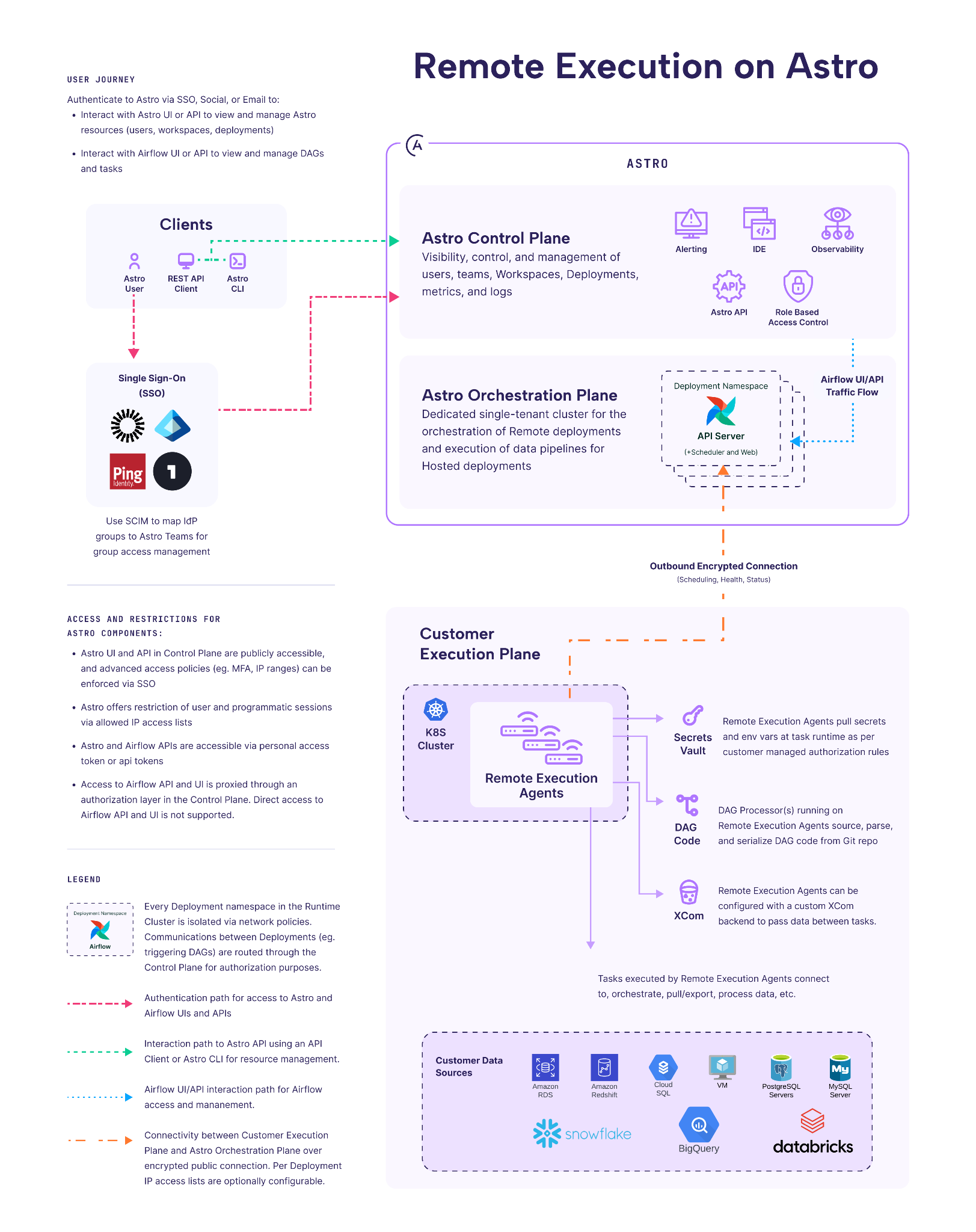
Figure 1: Stepping through Remote Execution’s architecture and traffic flow
Remote Execution uses a three-plane architecture:
- The control plane manages users and metadata but never sees your data.
- The orchestration plane schedules workflows in a single-tenant environment.
- The execution plane (fully yours) runs the tasks using your infra, secrets, and permissions.
Only outbound, encrypted connections are used. There is no need for inbound firewall exceptions. Astro’s exclusive remote execution agents authenticate with your IAM role and policy and run jobs under customer-managed identities. This aligns with zero-trust principles and removes the need to trade security for operational efficiency.
Bottom line: Astro gives you the benefits of a managed orchestration platform, including agility, performance, reliability, and reduced ops burden, without customer data ever leaving your secured and approved environment. That’s what makes it deployable in regulated environments such as healthcare where conventional SaaS models fail.
You can learn more by downloading our whitepaper: Remote Execution: Powering Hybrid Orchestration Without Compromise.
Astro Private Cloud
For organizations that cannot adopt any managed services, Astro Private Cloud delivers enterprise-grade Airflow-as-a-Service entirely within your own environment. It runs exclusively on customer-managed infrastructure—across private cloud, on-premises, or fully air-gapped deployments—providing complete ownership over data, network boundaries, and security controls.
Astro Private Cloud consolidates fragmented Airflow usage into a centrally governed platform with isolated, multi-tenant deployments. A unified control plane enables teams to standardize orchestration, enforce security and governance policies, and manage multiple Airflow environments while individual teams operate independently within dedicated namespaces.
By combining centralized governance with full infrastructure control, Astro Private Cloud reduces operational overhead, strengthens security and compliance, and enables organizations to reliably scale orchestration across the enterprise.
Note: Astro Private Cloud does not include features specific to the hosted Astro service, such as the Astro IDE and Astro Observe.
INITIATIVE TWO AI and Automation in Clinical and Operational Workflows
Embedding AI and automation across clinical and operational workflows seeks to reduce manual effort, improve accuracy, and extend staff capacity. Routine tasks like clinical documentation, coding, scheduling, and reporting are handled by agentic systems that work reliably within existing tools and processes.
Getting AI right means clinicians spend more time with patients, administrators focus on higher-value work, and operations run with fewer delays or errors. Health system executives recognize the urgency, with nearly 90% saying digital and AI transformation is a high or top priority. The question is no longer whether to invest in AI, but how to build the reliable, governed data foundation it depends on.
Example use cases include:
- Ambient Clinical Documentation: AI tools automatically transcribe and structure physician–patient conversations into coded clinical notes within the EHR.
- Clinical Decision Support: Predictive models analyze vitals, labs, and histories in real time to flag high-risk patients or recommend interventions.
- Revenue Cycle Automation: Agentic AI streamlines coding, prior authorization, and claims processing to cut delays and administrative overhead.
- Intelligent Scheduling: Algorithms forecast patient demand and optimize staff allocation to reduce wait times and overtime costs.
- Predictive Equipment Maintenance: Machine learning monitors device data to anticipate failures and schedule service before disruptions occur.
Despite clear opportunities across clinical and operational workflows, a reported 75% of providers are still struggling to operationalize AI effectively. They face fragmented data, manual workflows, and limited integration between AI tools and core systems like EHRs. Most organizations lack the infrastructure and governance to operationalize models safely at scale. As a result, AI remains confined to pilots.
Capabilities for AI-First Clinical and Operational Workflows
Operationalizing AI in healthcare requires more than powerful models. Rather it demands orchestration that connects clean, high quality data, enforces compliance, and automates model lifecycles spanning training to inference, evaluations and continuous improvement in production.
| Required Capability | How Astro Helps |
| Unified, Scalable Data Pipelines | Astro orchestrates data across end-to-end AI workflows. It ingests structured and unstructured data from EHRs, imaging systems, labs, and financial systems via 2,100+ connectors, and scales across on-prem or cloud GPU compute for model training and inference. |
| Model Lifecycle Automation and Observability | Astro automates data preparation, model retraining, and inference pipelines with built-in retries, logging, and SLA monitoring. Teams can track pipeline health and model performance in production, ensuring clinical and operational AI remains accurate, compliant, and trustworthy over time. |
| Secure, Compliant AI Execution | With Remote Execution, Astro separates orchestration from execution, allowing PHI and sensitive operational data to stay within hospital or government-controlled environments. Workflows run under customer-managed identities with enforced RBAC and full audit trails, aligning with HIPAA, GDPR, and regional data protection laws. |
| Real-Time and Parallel AI Workloads | Airflow supports event-driven and parallel execution, enabling instant model inference on streaming data such as patient vitals, imaging results, or scheduling events. This allows predictive models spanning sepsis detection to staffing optimization to respond in real time without latency bottlenecks. |
| LLM and Agentic Workflow Orchestration | Using the Airflow Common AI Provider, teams can orchestrate multi-step LLM and agent workflows that summarize clinical notes, draft discharge instructions, or automate administrative reviews. Astro manages branching logic, API calls, and error handling with production-grade reliability. |
| Flexibility to Evolve with the AI Landscape | Built on Apache Airflow, Astro is open and technology-agnostic, supporting almost any framework or library. Providers can integrate emerging AI models, clinical APIs, or analytics tools without re-architecting infrastructure thereby future-proofing AI investment as healthcare use cases mature and AI models advance. |
Airflow in Action
Airflow is already used by some of the most demanding AI companies and agentic workloads on the planet:
- OpenAI has standardized on Airflow across its business with over 7,000 pipelines spanning research, operations, and finance, all while providing a foundation for 10x growth. Read more.
- GitHub relies on Airflow to process billions of developer events per day, orchestrating the feedback loops used to continuously improve Copilot. Read more.
The healthcare industry is following suit.
Kaiser Permanente's Division of Research runs complex AI and ML pipelines across a Kubernetes-based infrastructure, using Airflow to orchestrate workloads securely in the research division’s own environment. Airflow-orchestrated pipelines process 600,000 delivery records to predict hypoxic-ischemic encephalopathy before clinicians can detect it, extract structured data from radiology notes to feed an aneurysm registry, and run NLP pipelines identifying early signs of psychosis from patient notes. The result is a governed, compliance-first AI research platform built on 30-plus years of longitudinal patient data. Read the full Kaiser Permanente story on the Astronomer blog to learn more.
INITIATIVE THREE Advanced Analytics and Predictive Insights for Population and Operational Health
Healthcare providers use integrated, high-quality data to move from retrospective reporting to proactive, predictive insight. Advanced analytics and machine learning models identify at-risk patients earlier, forecast operational demand, and guide resource allocation. Leaders can act on real-time intelligence rather than lagging reports. Results include improving outcomes, reducing costs, and optimizing throughput.
Health systems that harness advanced analytics report significant gains; for example, by integrating predictive models into care workflows, some organizations have achieved up to a 40% reduction in 30-day readmissions through earlier interventions. Specific example use cases for advanced analytics include:
- Population Health Risk Stratification: Predicts which patients are likely to deteriorate or be hospitalized to enable early intervention.
- Clinical Early Warning Systems: Monitors patient data to flag sepsis, readmission, or deterioration risks before they escalate.
- Operational Forecasting: Anticipates demand for ED, ICU, or staffing needs to optimize capacity planning.
- Patient Flow Optimization: Identifies and reduces bottlenecks across admissions, care provision, and discharge processes.
- Service Line and Cost Analytics: Links clinical outcomes to operational and financial metrics to pinpoint inefficiencies.
Today’s reality is that most providers remain data-rich but insight-poor, hindered by siloed systems, inconsistent data quality, and a lack of predictive infrastructure. Only 28% of healthcare leaders feel their organizations have high data literacy. Analytics is often retrospective, dependent on manual reporting and limited skilled resources. These gaps keep decision-making reactive, leading to missed early interventions, inefficient resource allocation, and higher costs.
Getting the Right Data to the Right Place, Fast
Building predictive and operational analytics in healthcare isn’t just about faster databases. Rather it depends on coordinated data pipelines, reliable transformation, and clear visibility into how insights are produced, validated, and consumed. Here’s how Astro enables it.
| Required Capability | How Astro Supports It |
| Real-Time Data Integration | Astro supports event-driven scheduling, triggering pipelines as new data arrives from EHRs, labs, imaging systems, or sensors. This enables real-time updates to dashboards, alerts, and predictive models powering early warnings and operational insights without batch delays. |
| Unified Data Platform | With 2,100+ pre-built connectors and flexible orchestration, Astro integrates siloed systems, i.e., EHR, LIS, RIS, ERP, and operational databases into a single pipeline layer feeding cloud data warehouses and data lakes, analytics platforms, and AI models. |
| Advanced Analytics Enablement | Astro orchestrates complex, distributed analytics workflows such as Spark jobs for population health, model scoring, and large-scale batch aggregations, scaling automatically to handle growing data volumes across clinical and operational domains. |
| Self-Service and Collaboration | Astro simplifies pipeline development and reuse through centralized orchestration and context-aware AI driven workflows, making it easier for data teams to support ad hoc analytics and BI requests while maintaining governance and visibility. |
| Data Quality, Governance, and Observability | With Astro Observe, teams monitor data freshness, schema consistency, and pipeline health. Built-in lineage tracking and SLA alerts help prevent inaccurate data from reaching clinicians or dashboards and speed up root cause analysis when issues occur. |
Astro in Action
- Carnegie Mellon University's Delphi Group — a CDC-recognized national center for epidemic forecasting — built crisis-era ML infrastructure during COVID that became fragile and unscalable by 2024. Rebuilding on Astro replaced bespoke pipelines and schedule-based polling with standardized Dag patterns and event-driven ingestion, delivering a platform capable of sustaining both steady-state operations and emergency-scale demand spikes. The result was a 90%+ reduction in data latency, 3x faster ML training pipelines, and 10x faster backfill run times. Read the full CMU Delphi story with Astronomer to learn more.
- Leap Metrics' Sevida platform delivers real-time analytics and care management across value-based care workflows, but their lean team couldn't afford to manage orchestration manually while scaling data solutions for healthcare organizations that lacked the infrastructure to unify diverse patient data sources. Adopting Astro gave the team a production-ready Airflow environment with secure, scalable deployments and hands-off infrastructure management. The result was a 4x increase in data pipelines without growing headcount, 25% faster delivery of new data products, and real-time insights as data arrives. Read more in the case study.
INITIATIVE FOUR Data Platform Modernization and Cloud Transformation
Through this initiative, healthcare providers replace legacy warehouses and on-prem systems with modern lakehouse architectures that unify EHR, lab, imaging, and operational data across hybrid and cloud environments. Clinical and administrative teams gain near real-time insights while IT automates maintenance, disaster recovery, and data lifecycle management.
By centralizing storage and leveraging elastic compute, providers reduce infrastructure cost, improve reliability, and gain the agility to support AI, advanced analytics, and population health initiatives without disrupting clinical workflows.
It’s telling that around 70% of health executives say investing in technology platforms for digital tools and services is now crucial, and 60% specifically cite the need to invest in upgrading core systems like EMRs and ERPs.
You Can’t Transform on Yesterday’s Platform
However many organizations remain constrained by fragmented legacy infrastructure that is costly, slow to scale, and difficult to secure. It is because of these challenges that 74% of healthcare organizations plan to centralize on a cloud platform within two years.
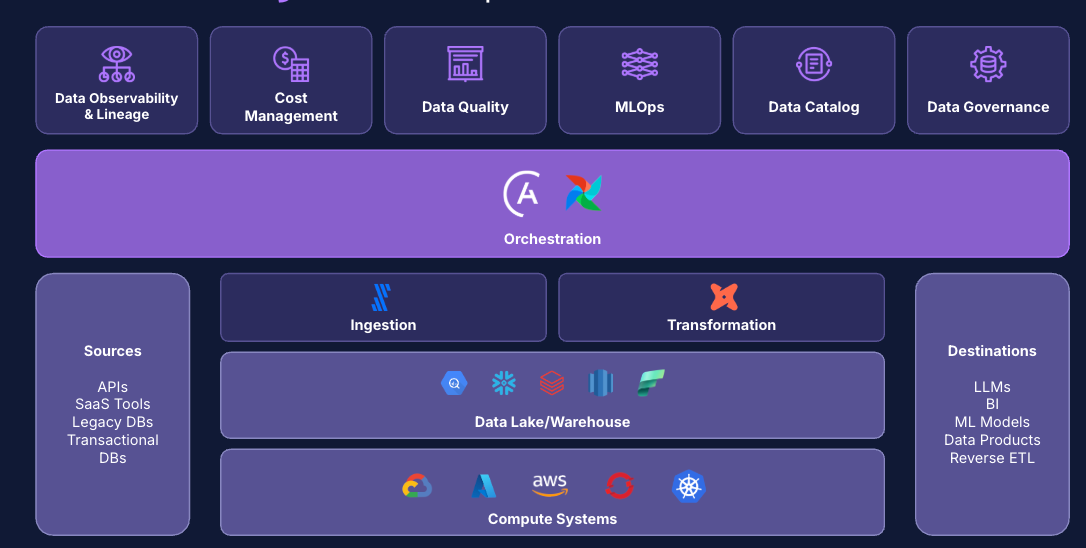
Figure 2: With the Astro platform, data teams work with a unified data stack to build, run, and observe all of their critical data pipelines and workflows.
Modernization Without the Mess
To modernize successfully, healthcare providers need more than just “lifting and shifting” existing systems onto cloud infrastructure. They need orchestration that bridges legacy systems, accelerates migration, and scales securely across hybrid environments. Here’s how Astro maps to those requirements.
| Required Capability | How Astro Helps |
| Data Migration and Integration from Legacy Systems | Bridging Legacy and Modern Systems. Astro connects to legacy EHRs, LIS, RIS, ERP, and on-prem databases as easily as to modern cloud warehouses and lakehouses. It orchestrates phased, synchronized ETL migrations so providers can modernize safely without disrupting clinical or reporting operations. |
| Plan Airflow Upgrades with Confidence | Otto, the data engineering agent for Astro, turns a multi-sprint project into a repeatable, agent-assisted process. It analyzes your entire Dag fleet against Astronomer’s knowledge base, identifying what breaks, proposing specific code changes, and producing a prioritized plan. |
| Hybrid-Cloud Flexibility | Astro supports hybrid and multi-cloud deployments, enabling zero-trust, policy-aligned orchestration across on-prem and cloud systems without exposing protected data. |
| Microservices and API Enablement | API-Driven, Event-Aware Workflows. Astro supports event-driven orchestration and native API integration, enabling real-time data services between cloud analytics, EHRs, and operational apps. This architecture underpins modern digital health, population analytics, and AI-driven workflows. |
| Scalability and Resilience from Day One | Autoscaling, cross-region DR, and zero-downtime updates deliver a 99.9% uptime SLA replacing the significant operational overhead of self-managing Airflow clusters, protecting critical data flows |
| Security and Compliance by Design | Enterprise-Grade Governance and Observability. Astro enforces role-based access control, audit logging, and data lineage tracking across all pipelines. These capabilities maintain HIPAA, GDPR, and regional compliance during and after modernization, providing continuous visibility into where data moves and who accesses it. |
Astro in Action
Data teams in healthcare providers adopt Astro to eliminate the legacy schedulers that often cripple the ability to ship new data products and workflows. Moving from legacy orchestration systems such as AutoSys, Control-M, Informatica or Apache Oozie to Astro unlocks strategic and operational gains:
- Cut costs by up to 75%. Organizations moving to Astro typically realize major savings through reduced infrastructure, licensing, and operational overhead, freeing budget for innovation.
- Unblock agility and scale with cloud-native orchestration. As a modern orchestration platform, Astro gives teams the flexibility, resilience, and scalability needed to support fast-moving data and AI initiatives without the constraints of legacy tooling and manual overhead.
- Attract and retain top engineering talent. Code-first and open source, by using Airflow data teams recruit top talent more easily and onboard faster, while avoiding lock-in to niche or proprietary tech.
Commonly migrated workloads include ETL jobs, data warehouse loads and refreshes, report generation and distribution, batch file transfers (FTP/SFTP jobs), data validations and quality checks, time- or event-triggered job dependencies across systems, and mainframe and SAP job coordination.
Thanks to Astro’s purpose-built executor, customers report 2x–4x better performance compared to self-managed Apache Airflow or alternative managed services.
No matter what workload or legacy orchestration tool your organization is using, Astronomer’s Professional Services team can help. The company’s experts can build an operational framework to smoothly and safely migrate your workloads to Astro.
Examples of modernization in healthcare companies includes:
- North America’s largest network of independent primary care providers experienced a weeklong outage of its self-managed orchestrator based on an early Airflow release. The incident impacted two million patient records and led to mid-high six-figure revenue losses. The root cause was unclear because the system lacked visibility. By modernizing on Astro, the provider has gained enterprise support, workflow observability, and in-built platform resilience to manage cost and reduce risk. Astronomer’s expertise brought confidence, reliability, and future-ready scale, including migrating over 300 pipelines in a single quarter.
- As part of its advanced analytics initiatives, a leading medical equipment manufacturer used Astronomer’s Cosmos to move its transformations from dbt Cloud to Astro. As a result, the company has improved developer velocity by 15% and saved over $500,000 annually in redundant cloud costs, all while improving visibility across its pipelines by unifying previously fragmented workflows.
“The cost savings with Cosmos are substantial, but the real value lies in how much more efficient our developers will be. By consolidating everything into a single environment on Astro, we’re simplifying our workflows and increasing developer productivity.”
Data Team Leader, leading medical equipment manufacturer
INITIATIVE FIVE Connected, Data-Driven Patient and Clinician Experience
Through investments in this final initiative, healthcare providers achieve a fully connected, data-driven experience where every patient and clinician interaction is informed by complete, real-time information.
- Patients access a single digital front door that unifies scheduling, test results, and secure messaging, while AI-guided triage tools route them to the right level of care. Personalized outreach and follow-up campaigns automatically trigger based on recent encounters or lab results, reinforcing adherence and engagement.
- Clinicians work within an integrated workbench that consolidates data from EHR, lab, imaging, and care management systems into a unified timeline, eliminating the need to navigate multiple interfaces. Analytics and predictive insights drive personalized care pathways tailored to each patient’s risk profile or recovery trajectory.
This seamless exchange of data across care settings creates a healthcare experience that feels continuous, responsive, and human for both patients and clinicians. Around 90% of surveyed C-suite executives expect the use of digital technologies enabling connected experiences to accelerate over the next one to two years.
Disconnected Data, Disconnected Care
Today however, patient and clinician experiences remain fragmented across disconnected systems, forcing duplicate data entry and incomplete information at the point of care. Siloed portals and legacy integrations limit personalization, while delayed data exchange undermines coordination between care teams. For clinicians, inefficient workflows contribute to burnout; for patients, poor digital experiences erode trust and engagement.
An AMA survey indicated that health providers recognize what is at stake. Around 70% expected that virtual health and “digital front door” investments would have the highest impact on patient experience and success
Powering Connected Care with Trusted Data Pipelines
Delivering a seamless, data-driven experience for patients and clinicians demands a unified orchestration layer that connects, activates, and governs clinical and operational data in real time. Here’s how Astro enables it.
| Required Capability | How Astro Helps |
| Unified Patient and Clinician Data Platform | Astro orchestrates 360° data pipelines across EHR, LIS, RIS, and care management systems to create a single, consistent view of patient and operational data. Reliable orchestration replaces manual data stitching, ensuring clinicians and applications always operate on the latest, most accurate information. |
| Real-Time, Event-Driven Workflows | Astro uses event-based scheduling to trigger workflows in response to clinical and operational events such as lab results posting, patient admissions, or discharge summaries. This enables timely alerts, outreach, and system updates across the care continuum. |
| API and Ecosystem Integration | Astro integrates securely with APIs and external systems, orchestrating bidirectional data exchange between EHRs, patient-facing apps, analytics platforms, and partner networks. This supports interoperability across the digital front door and downstream care coordination tools. |
| Security, Privacy, and Compliance Controls | Astro enforces enterprise-grade security and compliance through RBAC, audit logging, and policy-aligned execution environments. Combined with Astro Observe, teams gain end-to-end visibility into how PHI is processed and can demonstrate compliance for every data pipeline. |
| Scalability and Reliability for Patient-Facing Processes | Astro scales background workflows that power portals, clinician dashboards, and patient notifications, ensuring low-latency, high-availability delivery of the data that drives modern digital and clinical experiences. Cross-region DR ensures services remain available, even in the face of data center and cloud outages |
Astro in Action
A leading nonprofit health system serving Northern Virginia faced executive pressure to deliver a performant, scalable orchestration layer for clinical data, but their existing cloud environment struggled with reliability, scalability, and ease of development for critical healthcare workloads.
Adopting Astro on Azure delivered managed orchestration with Private Link security, Astro CLI for rapid local testing, and Git-integrated CI/CD — cutting deploy times 15x and reducing operational overhead through auto-scaling and hibernation of non-production environments. The result was faster clinical data pipelines that accelerate the patient insights their clinicians depend on.
Conclusion and Next Steps
Modernizing the data stack is no longer optional for healthcare providers. It’s a prerequisite for interoperability, compliance, and AI-enabled care. From reducing the burden of legacy infrastructure to scaling reliable, governed data pipelines, leaders are rethinking orchestration as the control plane for clinical, operational, and analytical workflows.
The most advanced organizations aren’t just connecting systems. Rather they’re consolidating, automating, and securing their data operations with platforms like Astro. The path forward is clear: unify orchestration, build trust in your data, and enable every patient and clinician experience to be informed, connected, and data-driven.
→ Build a trusted, future-ready data stack today
Run an Astro TCO analysis and get in touch with our experts today to get results faster.
GET THE FULL GUIDE
Keep reading to discover how forward-thinking data teams are laying the foundation for next-generation healthcare analytics.
By proceeding you agree to our Privacy Policy, our Website Terms and to receive emails from Astronomer.

Get started free.
OR
By proceeding you agree to our Privacy Policy, our Website Terms and to receive emails from Astronomer.