Orchestrating the Future of Hedge Funds
Introduction
Hedge funds operate on speed, precision, and control. They ingest massive streams of structured and unstructured data from many different systems and vendors, process it through proprietary models, and execute trades in milliseconds. Every stage of this lifecycle, spanning idea generation and risk modeling to investor reporting, is data-dependent.
The global hedge fund industry reached a historic milestone at year-end 2025, with total assets under management hitting $5.15 trillion, the first time the industry crossed the $5 trillion threshold. Industry research forecasts the market growing at a 9% CAGR to reach $8.8 trillion by 2031.
Supporting this growth, three themes dominate hedge fund technology investment over the next three years:
- AI and automation to accelerate research, execution, and surveillance.
- Data platforms & analytics modernization, while further strengthening regulatory governance.
- Investor experience, where Legal Partners (LPs) demand faster reporting, transparency, and trust.
Not all hedge funds operate the same way, and technology priorities vary by strategy:
- Discretionary. Human portfolio managers drive investment decisions, supported by research, risk analytics, and reporting. Data platforms, NLP, and AI assistants help surface insights from earnings calls, filings, and alternative datasets.
- Systematic (Quant). Algorithms and statistical models make trading decisions automatically. These funds depend on massive data ingestion, large-scale backtesting, and low-latency execution pipelines running across high-performance compute.
- Hybrid. Combine discretionary judgment with systematic signals. Portfolio Managers (PMs) use quant models for signal generation while retaining discretion on trade sizing and execution. This model requires orchestration across both research workflows and automated pipelines.
No matter the fund strategy, the common denominator is the same. Hedge funds live and die on data quality, speed, and control. The rest of this paper examines three investment priorities that cut across all fund types, and shows how Apache Airflow® and Astro make them executable.
Why Airflow and Astro?
- Apache Airflow has grown to become the industry’s most widely used system for orchestrating data workflows, as well as being one of the world’s most active open source projects.
- Astro, Astronomer’s unified orchestration platform, elevates Airflow into an enterprise-grade control plane purpose-built for high-scale AI and data-driven environments.
INITIATIVE ONE AI and Automation
For hedge funds, embedding capabilities for AI-first trading and research into the investment lifecycle is no longer optional. The objective is to generate alpha from unique signals by uncovering patterns humans might miss, compress time-to-decision, and automate operational processes without compromising compliance or control. Hedge funds are focusing on concrete use cases where AI adds value:
- Quantitative Research & Signal Generation: Apply machine learning to massive datasets (market, alt data, sentiment) to identify patterns, generate predictive signals, and surface trading opportunities faster than manual analysis.
- Portfolio Construction & Optimization: Use AI models and agents to rebalance portfolios, optimize position sizing, and enhance diversification, improving risk-adjusted returns across multi-asset strategies.
- Trading Execution & Algorithmic Strategies: Deploy agentic AI to optimize order routing, trade timing, and execution parameters in real time, maximizing returns and capturing fleeting arbitrage or momentum opportunities.
- Risk Management & Anomaly Detection: Leverage AI to detect hidden correlations, forecast liquidity or volatility shocks, and stress-test portfolios, enabling preemptive hedging and faster response to market stress.
- Operational Efficiency & Research Automation: Accelerate research, reconciliations, compliance checks, and reporting with AI/NLP; generate investment summaries and monitor communications, boosting efficiency while reducing manual workload.
Across all strategies, the challenge is the same: AI ambition outpaces execution. Research workflows remain fragmented, leaving PMs or models acting on inconsistent data. Model retraining and deployment are brittle, often tied to legacy schedulers or custom scripts, risking working with stale data. Latency gaps in execution can wipe out alpha in milliseconds. Without explainability and governance, AI-driven processes introduce new compliance risks at a time when regulators and LPs are watching closely.
Capabilities for AI-First Trading and Research
Embedding AI into hedge fund workflows requires more than the smartest models. Firms need orchestration capabilities that can connect data sources, automate model lifecycles, and deliver inference at market speed while staying compliant.
| Required Capability | How Astro Helps |
| Unified, Scalable Data Pipelines | Astro orchestrates end-to-end AI workflows for research, signal extraction, and execution models. It ingests structured market data, alternative datasets (satellite, web, credit card), and internal risk/position data via 2,100+ connectors, and scales across cloud or on-prem GPU compute for model training and backtesting. |
| Model Lifecycle Automation & Observability | Astro automates retraining, validation, and inference workflows. With built-in retries, logging, and SLA alerts, data teams track both pipeline health and model performance in production, ensuring that trading models stay accurate and compliant as conditions shift. |
| Secure, Compliant AI Execution | With Remote Execution in Airflow 3 (discussed in Initiative 2), hedge funds keep trading strategies, position data, and LP information inside their own VPCs or private clouds. Workloads run under customer-managed identities with full RBAC and audit trails, aligning with SEC and AIFMD reporting obligations. |
| Real-Time and Parallel AI Workloads | Astro supports event-driven scheduling and parallel inference, allowing models to respond immediately to market ticks, order-book updates, or liquidity shifts instantly. This enables automated trade execution logic and agent-triggered workflows without latency bottlenecks. |
| Production-Grade Reliability from Day One | Autoscaling, cross-region DR, and zero-downtime updates deliver a 99.9% uptime SLA replacing the significant operational overhead of self-managing Airflow clusters for critical AI workloads. |
| Multi-Step Agentic Workflow Orchestration | Astro’s Airflow Common AI Provider orchestrates multi-step LLM and agent workflows for research and compliance. It manages branching logic, tool calls, and vector embeddings with production-grade error handling — ideal for parsing earnings calls, monitoring news sentiment, or automating compliance checks at scale. |
| Flexibility to Evolve with the AI Landscape | Built on Apache Airflow, Astro is open and technology-agnostic, supporting custom code, new libraries, and emerging connectors. Hedge funds can swap AI tools or add new workflows without re-building infrastructure, accelerating experimentation and adoption. |
Astro and Airflow in Action
Airflow is already used by some of the most demanding AI companies and agentic workloads on the planet:
- OpenAI has standardized on Airflow across its business with over 7,000 pipelines spanning research, operations, and finance, all while providing a foundation for 10x growth. Read more.
- GitHub relies on Airflow to process billions of developer events per day, orchestrating the feedback loops used to continuously improve Copilot. Read more.
The financial services industry is following suit.
- At a top 5 global bank more than 100 data and ML teams use Astronomer to orchestrate AI and data workflows. With over 60 Airflow deployments running on a unified platform, the bank has standardized execution for use cases like real-time fraud detection, LLM-powered chatbots for consumer banking, and AI-driven forecasting for wealth management research. Astro supports fast, reliable orchestration across ETL, MLOps, and agentic AI, with certified Airflow engineers across the organization driving faster deployment and consistent governance across all lines of business.
- A North American fintech serving 30,000+ enterprise customers uses Astro as the backbone of its AI-driven data operations. Astro orchestrates multi-hour workflows across 25+ systems, feeding clean, structured data into Snowflake, dbt, and reverse ETL pipelines. This data powers LLM applications for client personalization, real-time sales intelligence, and a natural language interface for market research. Without Astro’s orchestration layer, these AI applications would simply not function at the scale or with the accuracy demanded by a regulated industry.
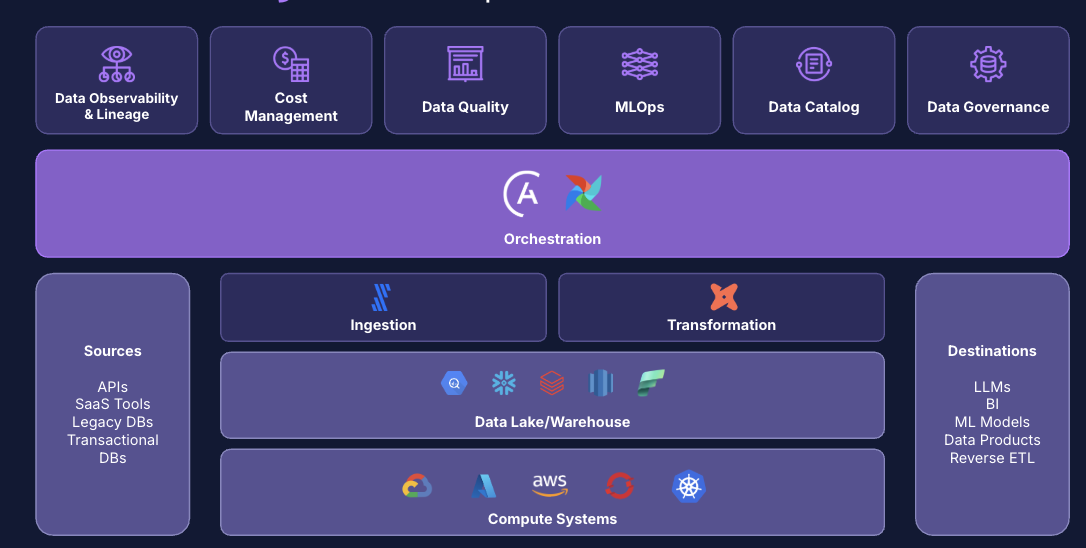
Figure 1: With the Astro platform, data teams work with a unified orchestration layer to build, run, and observe all of their critical data pipelines and workflows.
INITIATIVE TWO Data Platforms & Analytics Modernization
Hedge funds aim to replace fragmented legacy systems with a unified, scalable data platform that provides a single source of truth for trades, positions, and reference data. Modernization reduces silos, errors, and costs while enabling real-time reporting, advanced analytics, and future-proof agility across front, middle, and back offices. The ideal end state for hedge funds is to maintain a “golden copy” of core data that is centralized and standardized, with a robust integration layer distributing it to all necessary applications. Example modernization projects include:
- Next-Gen Risk & P&L Dashboards: Shift from batch-driven BI to real-time dashboards of risk, P&L, and liquidity.
- Regulatory Reporting: Automate Form PF, AIFMD Annex IV, and SEC disclosures with accurate, auditable data. Regulatory mandates adopted in 2024 and 2025 significantly expand hedge fund adviser reporting requirements, including more granular exposures, liquidity, and performance breakdowns.
- Market Surveillance: Real-time monitoring for compliance with SEC, FCA, and ESMA obligations.
- Data Lineage & Impact Analysis: Complete traceability to satisfy internal audit and investor due diligence; ESMA’s 2024 leverage and liquidity risk review highlights the pressure on alternative funds to prove control over data and reporting.
Despite the industry’s appetite for data-driven decisioning, many hedge funds remain constrained by legacy infrastructure. Siloed Order and Execution Management Systems, risk, and fund accounting systems mean data is stitched together manually, often through spreadsheets (“spreadmarts”). Batch processes introduce delays that render insights obsolete in fast-moving markets. The regulatory environment is only adding to the pressure, demanding more frequent and granular reporting.
Without integrated data pipelines and strong governance, hedge funds risk late filings, regulatory penalties, and erosion of LP trust.
Remote Execution: Secure Modernization in the Cloud
Hedge funds face a unique paradox. On one hand, cloud platforms offer the scalability required for modern analytics and AI workloads, while keeping teams lean. On the other, proprietary trading models, position data, and regulatory filings cannot leave tightly controlled environments without breaching compliance or investor obligations. This tension has slowed adoption of cloud-native data platforms and workflows, even as demand for flexibility grows.
Astro resolves this with Remote Execution, a deployment architecture introduced in Airflow 3. It separates orchestration from execution, so hedge funds get a fully managed Airflow control plane without sending sensitive data outside their VPCs or private clouds. Workflows run exactly where compliance and performance policies demand: co-located with exchanges for low-latency execution, within private data centers for risk and compliance reporting, or in elastic cloud clusters for research workloads.
As shown in Figure 2, Remote Execution uses a three-plane architecture:
- Our control plane manages users and metadata but never sees your data.
- Our orchestration plane schedules workflows in a single-tenant environment.
- Your execution plane (fully yours) runs the tasks using your infra, secrets, and permissions.
All communication between the execution plane and Astro’s control plane uses outbound-only, encrypted connections. These connections transmit a strictly limited data set: task run status and operational metadata such as task duration. Optionally, you can enable OpenLineage metadata export for integration with Astro Observe. In the other direction, the control plane sends only the instructions required to queue the next task. By restricting traffic, Astro ensures that neither proprietary data nor code ever leaves the customer’s execution environment.
There is no need for inbound firewall exceptions. Astro’s exclusive remote execution agents authenticate with your IAM and run jobs under customer-managed identities. This aligns with zero-trust principles and removes the need to trade security for operational efficiency.
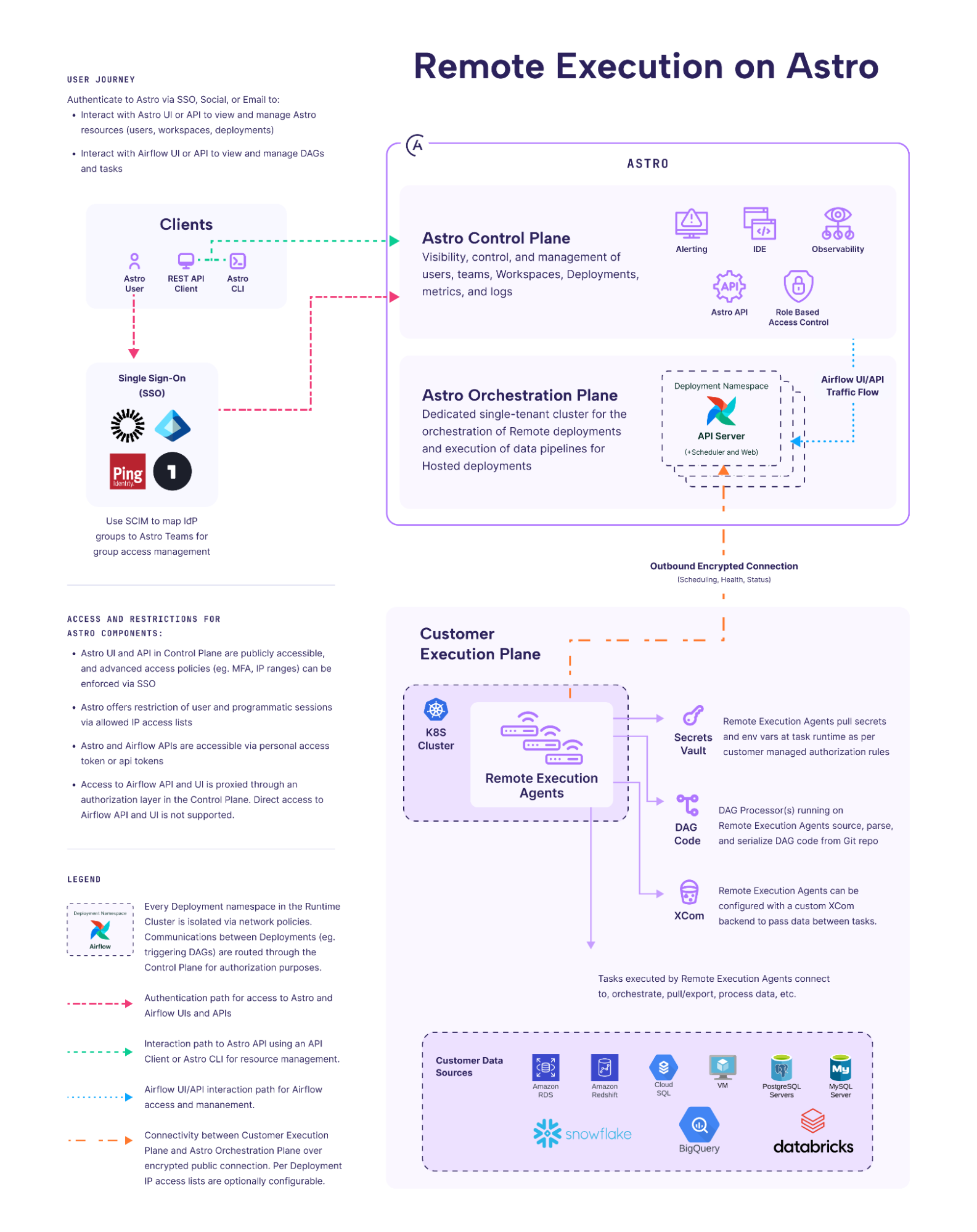
Figure 2: Stepping through Remote Execution’s architecture and traffic flow
Bottom line: Astro delivers the agility, performance, and resilience of a managed orchestration platform while keeping trading strategies, position data, and regulatory reports fully under your control. That’s what makes it deployable in hedge funds and other regulated environments where conventional SaaS models fail.
You can learn more by downloading our whitepaper: Remote Execution: Powering Hybrid Orchestration Without Compromise.
Astro Private Cloud
For organizations that cannot adopt any managed services, Astro Private Cloud delivers enterprise-grade Airflow-as-a-Service entirely within your own environment. It runs exclusively on customer-managed infrastructure—across private cloud, on-premises, or fully air-gapped deployments—providing complete ownership over data, network boundaries, and security controls.
Astro Private Cloud consolidates fragmented Airflow usage into a centrally governed platform with isolated, multi-tenant deployments. A unified control plane enables teams to standardize orchestration, enforce security and governance policies, and manage multiple Airflow environments while individual teams operate independently within dedicated namespaces.
By combining centralized governance with full infrastructure control, Astro Private Cloud reduces operational overhead, strengthens security and compliance, and enables organizations to reliably scale orchestration across the enterprise.
Note: Astro Private Cloud does not include features specific to the hosted Astro service, such as the Astro IDE and Astro Observe.
Foundations for Unified, Compliant Data Operations
Modernizing analytics and reporting is not just a matter of “lifting and shifting” to the cloud or replacing databases. Hedge funds need capabilities that unify siloed systems, enforce governance, and provide auditable, regulator-ready data flows.
| Required Capability | How Astro Helps |
| Hybrid-Cloud Flexibility | Astro’s Remote Execution. Decouples orchestration from execution, allowing sensitive workloads to run securely within your own infrastructure. It supports hybrid and multi-cloud deployments without exposing data, enabling zero-trust, policy-aligned orchestration across environments. |
| Plan Airflow upgrades with confidence | Otto, the data engineering agent for Astro, turns a multi-sprint project into a repeatable, agent-assisted process. It analyzes your entire Dag fleet against Astronomer’s knowledge base, identifying what breaks, proposing specific code changes, and producing a prioritized plan. |
| Policy-as-Code for Governance | Pipelines are defined in code and deployed via CI/CD. Teams can embed masking, validation, and logging as enforced steps, codifying governance directly into data operations. |
| Hardened Software Image for Production Deployment | Astro Runtime delivers a production-hardened Airflow distribution protected with timely security patches and controlled image updates. |
| Unified, Scalable Data Pipelines | Orchestrates ingestion and transformation across trading systems, OMS/EMS, risk engines, and market data feeds using 2,100+ pre-built connectors. Runs seamlessly on each of the hyperscalers, across cloud and on-prem environments, with built-in elasticity to handle peaks in trading and reporting cycles. |
| Modern Warehouse and Lake Integration | Provides native, optimized integration with cloud data warehouses and data lakes for scalable storage and analytics, ensuring AUM, P&L, and risk data is accessible to analysts and compliance teams in real time. |
| Comprehensive Data Lineage & Cataloging | Tracks every pipeline run, task execution, and data transfer in Astro. Produces complete end-to-end lineage from trade capture to NAV reporting, enabling faster impact analysis and demonstrating compliance with regulatory standards |
| Orchestration-Aware Data Quality | With Astro Observe, hedge funds can embed data quality checks directly into reporting pipelines, tracing errors back to specific tasks for rapid remediation. |
| Operational Resilience & Support | Astro provides 24x7 expert support from the team behind Airflow, along with commercially backed SLAs. This ensures uninterrupted investor reporting cycles and safeguards business continuity for funds managing billions in client capital. |
Astro in Action
Data teams across the financial services industry adopt Astro to eliminate the legacy schedulers that often cripple their ability to ship new data products and workflows. Moving from legacy orchestration systems such as AutoSys, Control-M, Informatica or Apache Oozie to Astro unlocks strategic and operational gains:
- Cut costs by up to 75%. Organizations moving to Astro typically realize major savings through reduced infrastructure, licensing, and operational overhead, freeing budget for innovation.
- Unblock agility and scale with cloud-native orchestration. As a modern orchestration platform, Astro gives teams the flexibility, resilience, and scalability needed to support fast-moving data and AI initiatives without the constraints of legacy tooling and manual overhead.
- Attract and retain top engineering talent. Code-first and open source, by using Airflow data teams recruit top talent more easily and onboard faster, while avoiding lock-in to niche or proprietary tech.
Commonly migrated workloads include ETL jobs, data warehouse loads and refreshes, report generation and distribution, batch file transfers (FTP/SFTP jobs), data validations and quality checks, time- or event-triggered job dependencies across systems, and mainframe and SAP job coordination.
No matter what workload or legacy orchestration tool your organization is using, Astronomer’s Professional Services team can help. The company’s experts can build an operational framework to smoothly and safely migrate your workloads to Astro.
When a $3 Trillion Investment Firm Outgrew Self-Managed Airflow
A global investment management firm with $3 trillion in AUM relied on a fragmented, self-managed Airflow setup to underpin critical portfolio reporting and investment analytics, but limited in-house expertise, rising support costs, and manual disaster recovery left key financial data processes exposed to risk. Adopting Astro modernized their data platform across federated global teams, delivering enterprise-grade disaster recovery with an RTO of under 2 hours and RPO of under 15 minutes, improved security and observability, and consistent data delivery at scale. The result was 6,600 pipelines migrated to Astro in just 16 weeks.
INITIATIVE THREE Investor Experience
LPs today expect more than quarterly Net Asset Value (NAV) statements — they want timely, consistent, and interactive reporting that demonstrates control and transparency. The end goal for hedge funds is to deliver this information quickly and securely, while tailoring outputs to the needs of different investor segments. That means shrinking NAV production cycles through automated reconciliations and valuations, and moving beyond static PDFs to on-demand LP portals where live performance, exposures, and risk metrics can be explored interactively.
At the same time, investors are standardizing their due diligence frameworks, codifying expectations around disclosure, valuation, and governance. This means reporting workflows must not only be faster, but also audit-ready and regulator-aligned, with consistent data lineage across investor, trading, and accounting systems.
For hedge funds, delivering this end state requires more than cosmetic portal upgrades. It demands orchestrated investor data pipelines that can ingest from fund accounting, OMS, CRM, and custodians; trigger reporting events in response to valuation cycles, market moves, or investor actions; and personalize reporting outputs at scale. Those that succeed will stand out in fundraising and retention, while those that lag risk losing allocations to more transparent, technology-enabled peers.
Enablers of Transparency and Trust at Scale
LPs now expect timely, consistent, and personalized reporting as the baseline. Meeting that bar requires orchestration capabilities that automate investor data pipelines, enforce security, and deliver resilient outputs to portals and reports.
| Required Capability | How Astro Helps |
| Unified Investor Data Pipelines | Astro orchestrates ingestion and reconciliation across OMS/EMS, fund accounting, risk, and CRM systems, creating a single source of truth for NAV, performance, and investor reporting. |
| Event-Driven Reporting Automation | Orchestrates workflows triggered by portfolio valuation cycles, cash flows, or market events, reducing NAV production cycles from weeks to days and enabling more frequent investor updates. |
| Secure, Compliant Delivery | With Remote Execution, sensitive LP, trade, and position data never leaves the fund’s compliance boundary. All workflows run under customer-managed identities with full audit logging, meeting regulatory standards. |
| Data Quality & Lineage for LP Trust | Astro Observe links data quality checks directly to reporting tasks. Lineage tracking provides a transparent audit trail for LPs and regulators. |
| Personalization at Scale | Orchestrates AI/ML models and APIs that generate tailored reporting packages per LP, covering exposures, allocations, and P&L breakdowns, aligned with investor mandates. |
| Multichannel Reporting & Portal Integration | Astro pipelines feed investor portals, APIs, and batch reports with consistent data. LPs see the same performance numbers regardless of delivery channel, eliminating reconciliation disputes. |
Astro in Action
- A global investment management firm, with over $1.5T in assets under management, faced mounting risk as it sought to migrate from a patchwork of Informatica, Oracle, and Autosys systems to a modern Airflow- and Snowflake-based architecture. Fragmented environments, unstable data pipelines and repeated project delays threatened production rollout and business continuity. By moving to Astro on AWS, the firm stabilized pipeline performance, unified orchestration across teams, and successfully completed its migration to the latest release of Airflow. The result: standardized data workflows for $1.5T in AUM, elimination of legacy tool overhead and version fragmentation, and a reliable foundation for future growth.
- Another global investment management firm headquartered in London found that as Airflow scaled, quants across multiple teams were spending growing amounts of time managing infrastructure and incidents rather than building analytics. Central IT lacked the bandwidth and Kubernetes skills to keep pace, creating risk and limited visibility across Snowflake and Databricks environments. Adopting Astro on Azure eliminated the infrastructure burden for quants and IT alike, unified Airflow across teams, and delivered full observability into data consumption. The result was a 20% reduction in TCO and 24/7 managed support.
Conclusion
For hedge funds, alpha and investor trust now depend as much on resilient data infrastructure as on investment skill. Harnessing AI, delivering real-time research, timely NAV and regulatory reporting, and personalized LP communications share the same foundational requirements:
- Clean, timely, governed data
- Reliable, observable pipelines across hybrid, multi-cloud, and on-premise environments
- Scalability and cost efficiency that adapts to evolving compliance, operational, and market demands
That is the role of orchestration. The hedge funds that win the next decade will treat orchestration as the control plane for AI, compliance, and customer experience. They will operationalize it with platforms like Astro.
Build a trusted, future-ready data stack today.
Run an Astro TCO analysis and get in touch with our experts today to get results faster.
GET THE FULL GUIDE
Keep reading to explore the three priorities shaping the future of hedge funds.
By proceeding you agree to our Privacy Policy, our Website Terms and to receive emails from Astronomer.

Get started free.
OR
By proceeding you agree to our Privacy Policy, our Website Terms and to receive emails from Astronomer.